data-slots=text
Install Page Builder
data-variant=info
data-slots=text
For everyone else, Page Builder is automatically installed with Adobe Commerce 2.3.1. There is nothing else you need to do.
GitHub installation for Contributors
Before installing Page Builder for making contributions, you must have the following prerequisites:
-
A local development installation of Adobe Commerce 2.3.1+ -- Use the installation instructions from the DevDocs installation guide.
-
Access to the private Page Builder repository. You should participate in Adobe Partner Program to have these permissions.
-
Clone the Page Builder repos into the root directory of your Adobe Commerce 2.3+ installation:
git clone https://github.com/magento/magento2-page-builder git clone https://github.com/magento/magento2-page-builder-ee -
From the root directory of your Adobe Commerce installation, use the
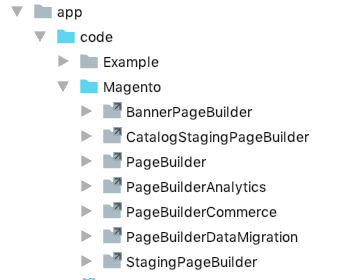
dev/tools/build-ee.phpscript to symlinkmagento2-page-builderandmagento2-page-builder-eerepos into your Magento Commerce installation:php dev/tools/build-ee.php --command=link --exclude=true --ee-source="magento2-page-builder" --ce-source="." php dev/tools/build-ee.php --command=link --exclude=true --ee-source="magento2-page-builder-ee" --ce-source="."The results should look like this:
-
Enable the Page Builder module using the following command:
bin/magento setup:upgrade
Updating GitHub installation
When a new version of Page Builder is available, pull the latest versions from GitHub at magento/magento2-page-builder and magento/magento2-page-builder-ee.
Installing Node.js dependencies
If you plan to contribute to Page Builder, you need to install Node.js dependencies to compile TypeScript.
Navigate to the pagebuilder directory and install Page Builder dependencies using the following command:
cd <pagebuilder-git-folder>
npm install
After installing the npm packages, you can run:
npm run start
This command watches for changes to your TypeScript files, compiles, and checks for errors.